Physical Address
304 North Cardinal St.
Dorchester Center, MA 02124
Physical Address
304 North Cardinal St.
Dorchester Center, MA 02124


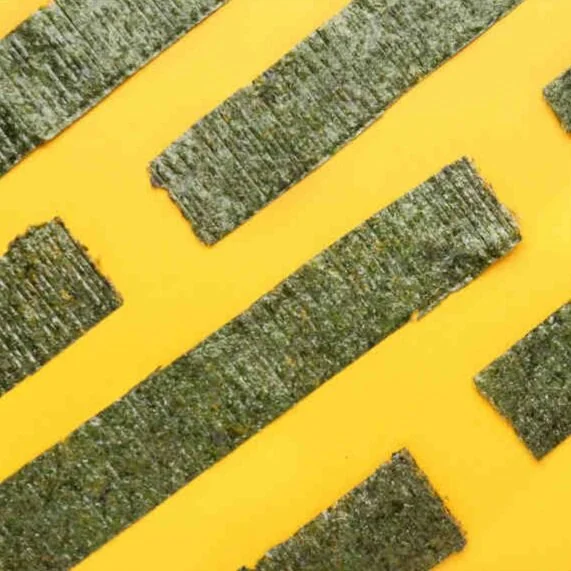
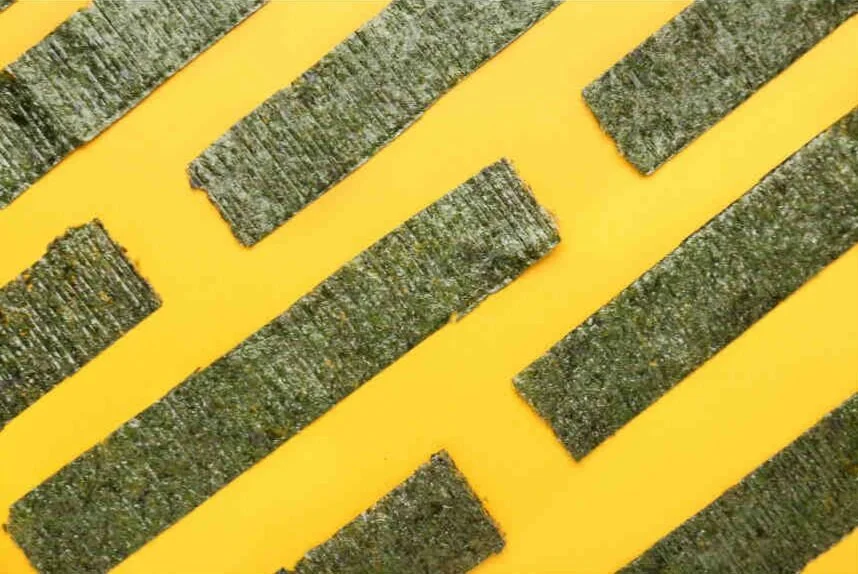
Gim is made from harvested edible seaweed that is washed and pressed into thin layers and dried until crisp. Although it used to be collected from the rocks it grew on, due to immense global demand, most seaweed is now farmed on floating rope racks that allow for easier harvesting.
It may also be referred to as “laver” which is a type of seaweed. To get even more into specifics, it is classified as a red algae (over 6,000 types of red algae btw). If you’re into this stuff, it’s mostly from the genus Porphya (previously known as Pyropia) and is from the algae family Bangiaceae.
All laver is seaweed, but not all seaweed is laver. Teehee.
There is an interesting article all about it here on the UK site, EatWeeds.
Another interesting article you may want to check out from American Scientist: “The Science of Seaweed”.
This red algae is delicately beautiful with gentle pink and purple hues that inspires the artistic heart.
There is a food with the same description as Gim in historical records from the Memorabilia of the Three Kingdoms (check out the book Samguk Yusa* here if you’re into Korean history). However, it was during King Injo’s reign 1623-1649 during the Joseon Dynasty that it was officially given the name of Gim.
A man with the last name Kim (pronounced Gim in Korea) presented this food for the king’s table. The king liked it so much, he declared this delicacy to be named after him (the guy with the last name Kim, not the King). A bit simple for an origin story, but there it is.
*Note for the History Buffs: Just in case you’re interested, there are 2 major texts on Korean history. Samguk Yusa (1281) was written by a Buddhist monk and takes into account mythologies, tales and legends. A personal passion project, it does have limitations in the scope of regions it covers.
On the other hand, Samguk Sagi (1145) was written by a government official historian ordered to write a historical account and sponsored by the King (This more resembles what we expect from a history book. However, written and supervised within the palace it does have a political tone. This Wiki article explains it well).
Seaweed is a broad category of edible vegetation from the sea. It includes marine plants and algae (like kelp). Laver is a classification of seaweed, specifically a red algae (genus. Porphyra).
There are 4 main categories of GIM available usually available at the Korean supermarket. There are many more that are region-specific or from a boutique seaweed farm (yes, there is such a thing) that utilizes cultivation techniques closer to naturally grown laver, but it’s doubtful we will find them available online outside of Korea.
Jarae Gim is considered the regular go-to Gim of choice for unroasted, unseasoned seaweed sheets. It has a tight weave, without gaps and is smooth in texture. All the pre-seasoned snack Gim readily available is made from this type.
“Jarae” translates to “traditional”.
It is quite thin and you may find it tears easily if you try to make sushi or Gimbap with this type of sheets.
It is usually enjoyed roasted (quick flips on a dry pan should do the trick) or oiled (lightly brush oil of choice), salted (lightly) and roasted. Cut it into small rectangles and set it on the table as a Banchan.
Or. Eat it on its own, top it on some rice or cut or crush as a garnish.
“Dol” means Rock in Korean and this Gim is made from algae that grows on… you guessed it, rocks. It will have many holes and gaps in the sheets making it unsuitable for Gimbap rolls. It also has a rougher texture (compared to Jarae Gim) with a stronger seaweed-y scent.
Some people will like its distinct taste with chewier texture while some may dislike it for the same reasons.
Roast it or oil, salt and roast it. Cut into small rectangles and eat how you like.
This is Jarae (regular) Gim laver that has been mixed with usually 30-40% Parae (a green algae type).
It has a stronger green hue and is attributed to many health benefits. In Korea, it’s said to be good for your teeth and to aid with skin issues like Dermatitis. It has a pronounced bitter aftertaste, so it’s mixed with Jarae Gim to make it more palatable.
Not unlike Spirulina and Chlorella, Parae is touted as a green superfood in Korea.
Before, it was seen as a subpar product because of its variation in colour and prevalence for holes (it’s hole-y!). But now people recognize the health benefits in this “ugly” product and enjoy the patchwork of colour.
Some people enjoy the acquired taste of Parae so much they will seek out special producers that will make Gim with up to 70% Parae.
As you can probably tell by the way this is going, Gim is usually enjoyed roasted before eating. Or oiling, salting and roasting. Cut to size.
This is the thickest type of Gim. It is made to be used for rolling rice and ingredients in a roll (read: Gimbap). It is actually Jarae Gim that’s been pressed in more layers to a make a thicker product.
Although it can be an all-purpose Gim (to make side dishes or to use as garnish), its overly thick texture may make it unsuitable for all uses (just a personal preference though!).
Most people buy Gimbap Gim when they specifically want to make Gimbap.
The taste profile is the same as Jarae Gim and the difference is the thickness.
Because it’s multiple layers of dried seaweed, you may find the seaweed scent overwhelming. If so, it’s recommended you buy the pre-roasted Gimbap Gim (if available) to avoid this problem.
Gopchang Gim is a relatively new product that carries a premium price tag of 2x, sometimes 5x the price of regular Gim.
It’s made from laver that is very curly that can only be harvested for 20 days out of the entire year.
It is said to be very tasty and have a smooth but subtly chewy texture. My local Korean grocery store does not carry any of this Gim. Insert sad FOMO face emoticon.
Seaweed’s got Carbohydrates, Protein (!), Calcium and Iodine to name a few. How about Vitamins? Will A, B1, B2, B12, C, E, K do for a health boost? Don’t forget nutrients like Calcium, Copper, Folate, Niacin, Potassium, Sodium, Thiamin. And the cherry on top, it’s got antioxidants too.
Some benefits are that it’s good for your thyroid and digestive system (gut health!). It may reduce heart disease risks, lower cholesterol and help control blood sugar levels. And this isn’t an exhaustive list.
Legit Superfood status.
Keep in mind, the research is not complete (is it ever?) and health benefits touted will always have a disclaimer about more studies being needed for definitive conclusions.
Also keep in mind the healthiest Gim is the unseasoned, unoiled and unsalted kind. I know, so boring.
Dried seaweed in its least processed form will be the most beneficial health-wise. Get a plain package and take out only as many as you will consume at a particular meal. Roast them for a few seconds on each side and enjoy the natural taste of this vegetable of the sea.
You can also brush on some quality oil and lightly salt before roasting for a truly delicious snack or Banchan (side dish to a rice-based meal).
Seasoned dried seaweed “snacks” sold in most stores are called snacks for a reason.
They are oiled with cheap oil and salted, so don’t consume it over-enthusiastically just to gain health benefits.
On the other hand, if this is the only way you enjoy eating dried seaweed, some health benefit rather than none is better! Just consume in moderation as it is quite salty.
Gim is Halal because the core ingredient (seaweed) is a completely (sea) plant-based food.
There are many Korean brands gaining Halal certification, so you may be able to find Gim with that specific label. Otherwise, you can make sure by checking the ingredients list.
For example, Costco’s Kirkland Roasted Seaweed Snack contains only seaweed, corn oil, grape seed oil, sesame oil and sea salt.
Yes, as seaweed is a marine plant, Gim is a very good food choice for those on a vegan or vegetarian diet.
Most commercial Dried Seaweed is made from farmed seaweed.
Seaweed is harvested in the winter (cold months) for optimum flavour. In the warmer months, the water temperature becomes too warm. Depending on the type of Gim (or seaweed used), it can be harvested up to 8 times a season.
Seaweed farming (a huge industry in Korea) will usually use ropes made into racks which float in the water. When it’s time, machinery will lift these “racks” (large nets) and collect all the hanging seaweed.
The seaweed must quickly be taken to the factory and put into water to maintain freshness. There are huge tanks that gently swirl the seaweed and clean it from debris.
Then it is a quick process of pressing and drying that can take as little as 4-6 hours.
Lastly it is divided into different products. Most Korean households will buy full sheets and roast and cut them right before serving. Or it may be pre-cut, oiled and salted before packaging and shipping. These are the multi-packs we can find at Costco and Walmart (like this one).
With global demand for Gim snacks, there are now some that will be flavoured and may even have other added ingredients like nuts to eat as a bar snack.
There are those who warn of the dangers of eating seaweed as it will readily absorb toxins in their environment. Although it is important to try to source seaweed grown in clean waters, as a consumer, it’s difficult to know with certainty the quality control a supermarket food product has gone through.
Research on the effects of this is not extensive enough to draw dependable conclusions. This very serious research document states, “Seaweeds growing in areas of contamination… accumulate heavy metals… but at levels that pose little risk to human health”
A conservative recommendation to obtain health benefits from Gim is 2 large sheets per day.
These would be the large sheets (similar to a letter size paper) sold at the supermarket. Or 2 Gimbap- rolling Gim sheets. It’s also safe to assume it’s healthier to eat the unseasoned type (no oil or salt).
Gim is a very common side dish so this recommendation is probably geared to those who eat it on an almost daily basis. A biophysics researcher at the University of Southern Denmark has been quoted to estimate that eating 5-10g of dried seaweed to be healthy (source).
Everything in moderation, friends.
Typical ways that Koreans judge the quality of Gim are to look for a shiny appearance that is very deep black colour, without many blemishes like holes or bumpiness.
In my opinion, this is a moot point as only few Korean brands are exported worldwide.
The suggestion I would give a friend for Gim would be to follow the big Korean food brands. Not the best option, but it’s dependable.
KwangCheonKim and DaeCheonKim are 2 large companies specializing in seaweed sheets.
Big, dependable brands widely available include Gim from brands like CJ Bibigo and Pulmuone.
Gim is enjoyed for its crispiness. It should shatter between your teeth and be light in the mouth. A proper Gim will explode in crumbs with each bite- not an ideal first date food.
It should not at all be moist or limp. If it is, follow the directions below to revive its crispness. Think of that bag of chips you left out open on a hot summer day and it’s lost its crunch. Not yummy.
Pre-seasoned Gim can be enjoyed as it suggests on its packaging, as a snack. Most Koreans eat these pre-cut sheets with rice. It’s an easy Banchan (side dish) to add to the table.
You can also crush them into flakes to garnish other dishes, or to mix with rice and to make rice balls.
For the Gim connoisseurs who enjoy the actual taste of Gim (rather than the salt and seasonings), you should explore unseasoned Gim sheets in its various forms: Jarae Gim, Dol Gim, Parae Gim.
A quick roast on a hot pan will yield a really enjoyable flavour that is subtler than the seasoned stuff. Give them quick flips until you see a greenish hue appear.
You can, of course, oil and salt them yourself. Large sheets are meant to be roasted and cut right before eating.
1. Roast unseasoned Gim sheets.
2. Put them in a bag and crush them to bits.
3. Mix garlic, soy sauce, sugar, sesame oil (salt to taste).
4. Mix it into Gim. Eat immediately.
1. Roast unseasoned Gim sheets.
2. Put them in a bag and crush them to bits.
3. Fry them in some oil.
4. Add sugar and ground sesame seeds and cook until mixed and crispy.
Store sealed in a ziploc bag in the freezer for maximum freshness.
If consuming on a regular basis, keeping it in a cool, dark place is fine as well. You know those silica gel packets that keep dry foods dry? If you’ve got one, pop one in there.
If Gim loses its freshness (crispness), there are 2 things you can do.
1. Put Gim in the microwave for 10 seconds (add more seconds to get the crispness of your liking- not too long as it could easily burn!).
2. If unseasoned, oiling and salting plain seaweed sheets and roasting them will make them crunchy and tasty again.
If you don’t finish Gim (especially in the case of the pre-salted, pre-roasted variety), you’ll find it may lose its crispy texture in as little as a few hours on a warm day.
Moisture and humidity are the enemy for delicious Gim. Try to keep the package as air-tight as possible (hello, Ziploc).
Storing dry seaweed sheets in the fridge is not recommended.
If nothing helps, not to worry, you can also cook with it. The simplest thing to do would be a Gim Soup. Make some anchovy/kelp broth (easy if you have the pre-made soup teabags like these), swirl in a beaten egg or two (think egg drop soup) and cut the Gim into strips and add at the end.
DaeCheonKim Jarae (Regular) Gim Sheets https://amzn.to/3gIs6On
Waegotzip Roasted and Salted Dolgim Seaweed Sheets https://amzn.to/2UV1GkS
KwangCheonKim Brand Pre-Roasted Gimbap (Regular) Gim https://amzn.to/3sTMUHN
Haewoochon Premium Unseasoned Parae Gim Sheets https://amzn.to/38pMrUh
Haewoochon Premium Unseasoned, Twice Roasted Gimbap Gim Sheets https://amzn.to/3ylVXlH
KwangCheonKim Brand Kakao Friends Super Cute Character Package Pre-Seasoned Gim Packs https://amzn.to/3sX4lqT
KwangCheonKim Brand Baby Shark Character Package Pre-Seasoned Gim Packs https://amzn.to/3BmwY3H
CJ Roasted, Salted Seaweed Snack Packs https://amzn.to/3BiC01d
Uncle Nick Korean Seaweed Snack with Buckweat and Sesame Seeds https://amzn.to/38lT75H
Korean Banchan Gim Jaban Ready-to-Eat Seaweed Flakes (sprinkle on rice) https://amzn.to/38oq4yk