Physical Address
304 North Cardinal St.
Dorchester Center, MA 02124
Physical Address
304 North Cardinal St.
Dorchester Center, MA 02124


The origin of the term JIN GANJANG used to refer to the duration of fermentation that homemade soy sauces went through. Originally, all soy sauces in Korea were homemade. Today, it refers to the most economical (read: not great) all-purpose soy sauce available on the market. Cheap and cheerful, it can do the job for nearly all Korean recipes so you will most likely see it in many households. Ironic, isn’t it?
CHUNG-JANG (청장) referred to the sauce made only in the first year or two. It was light in colour.
JOONG GANJANG (중장) was what they called the sauce that was kept for 3-4 years.
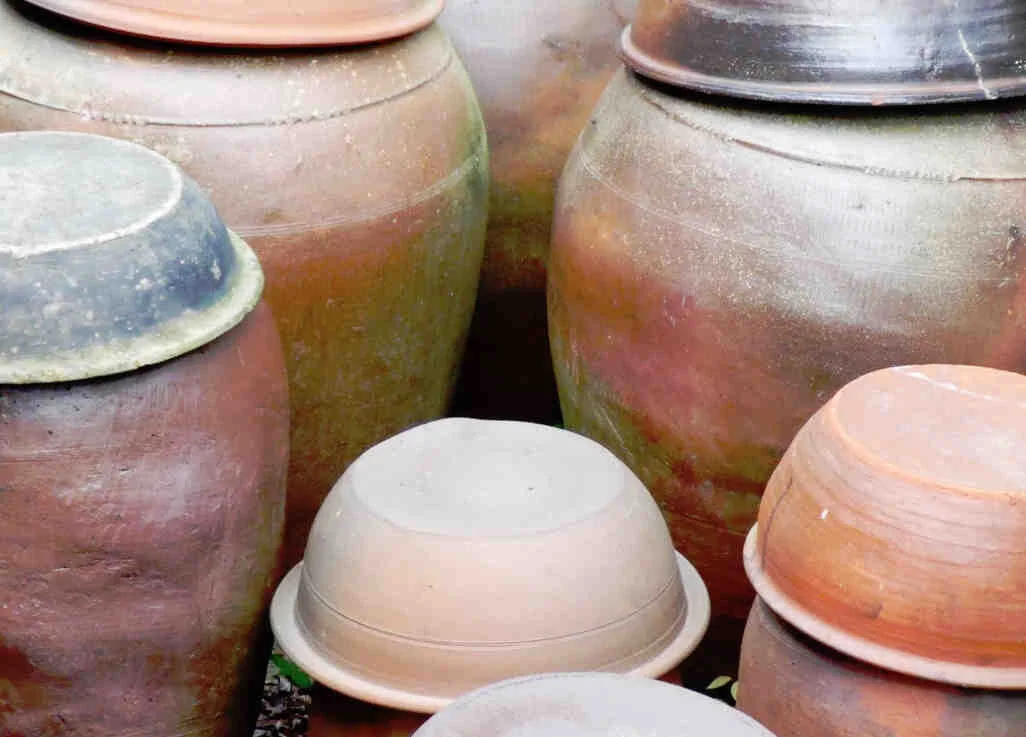
JIN GANJANG (진간장) was what they meant when a homemade soy sauce was aged over 5 years. This had the darkest colour and had the most depth of flavour. JIN (진) meaning deep, dark colour. There are still some (just not the majority) of people still making they own soy sauces and pastes at home. I have read about vintage soy sauces that have aged 10+ years in a clay pot that are apparently, divine.
Okay, now brace yourself for some science.
The quality of soy sauce is determined by a TOTAL NITROGEN value. That’s because the longer soybeans are fermented, they emit more protein compounds in the form of nitrogen. Wow, fascinating, right? Don’t worry, all you need to know is that the higher the number, the better.
1% Low Quality
1.8% Super Awesome Quality
I know, who cares about a few 0.1% points. Guess what, it is a big deal and there are product lines dedicated to each tenth of a percentage difference.
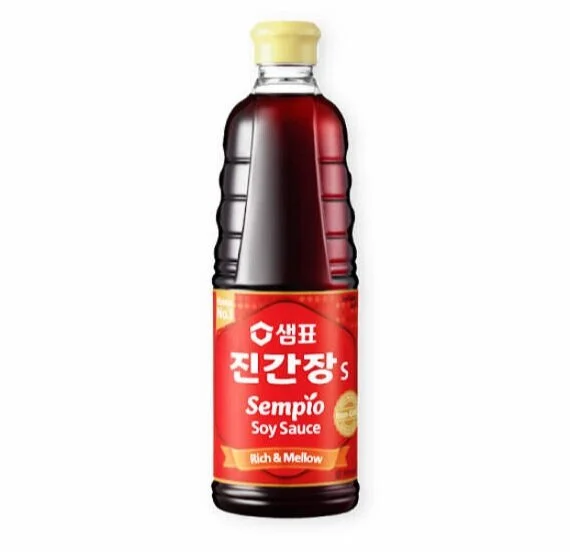
JIN GANJANG S T.N.1% Blended 7% Yangjo Soy Sauce + 93% Acid Hydrolyzed Soy Sauce

JIN GANJANG GOLD S T.N1.1% 10% Yangjo Soy Sauce + 90% Acid Hydrolyzed Soy Sauce

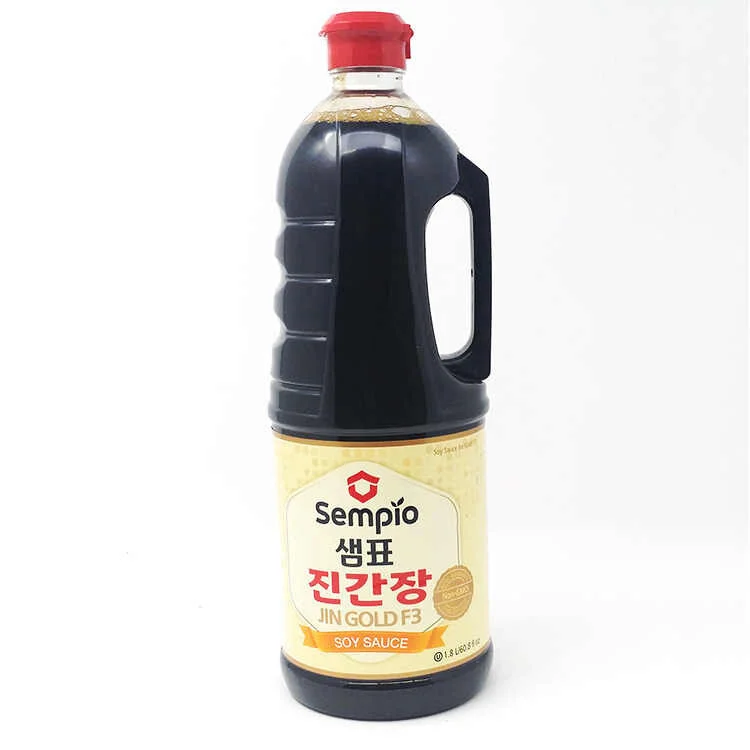
JIN GANJANG GOLD F3 T.N.1.3% Blended 30% Yangjo Soy Sauce + 70% Acid Hydrolyzed Soy Sauce
This is the chemical processing inexpensive soy sauces go through to produce a finished product within days instead of the typical months-long fermentation. It involves adding hydrochloric acid to the soybeans. Sounds gross, right?
But for the sake of full disclosure, it is also used to process additives like fructose and citric acid. Guess where those ingredients go into? Pop, cookies and ketchup. Guess what other uses it has? It can clean tile, porcelain and disinfect pools. I will never look at ketchup the same way again, that’s for sure.
(Source: Maangchi makes Bean Paste and Gourmet Vegetarian Kitchen making Korean Soy Sauce)
Boil soybeans
Mash beans
Shape into blocks
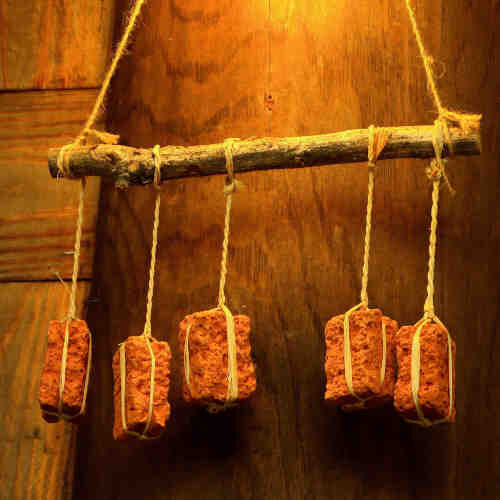
Dry them until stable enough to hang (may take 3+ days)
Hang them up like stinky little Christmas parcels in a well-ventilated area (4-6 weeks)
Ferment them in a warm place for a couple of weeks
Hang them up again for another month
Scrub fungi off blocks and let it dry in the sun completely
Submerge in brine
Ferment for 2-6 months (or longer!)
Ta-da! Delicious homemade soy sauce with only 3 ingredients!
(Source: How Products are Made SOY SAUCE)
Boil soybeans in hydrochloric acid for 18+ hours
Liquid is neutralized with sodium carbonate
Filter and purify
Add artificial colouring, sugars and salt to mimic look and taste of soy sauce
Done
As you can see, instead of months or years of fermentation, adding chemicals allow factories to manufacture soy sauce so much faster. This means faster production and lower prices.
The sad history of this method comes from the Japanese occupation of Korea that lasted from 1905 until the end of World War II. This quick processing method was introduced to supply its troops and was then widely adopted because it was so efficient for mass production. The sadder part is that this technique lives on because it is so cost effective.
Studies have found that during this chemical processing of soy beans, toxic substances can be produced. Namely, the substance 3-MCPD is a known carcinogen.
What’s the point of all this? Put your dollars at work and don’t buy the chemically processed, “blended” soy sauces- All the JIN GANJANG SOY SAUCES from Sempio are blended. Hopefully this will make corporations who put profits ahead of the health of its customers think twice and change their production methods.
Here’s to hoping- not holding my breath though. Unfortunately, the soy sauces used at restaurants (especially those take-away packets of soy sauce) most likely are the blended kind.
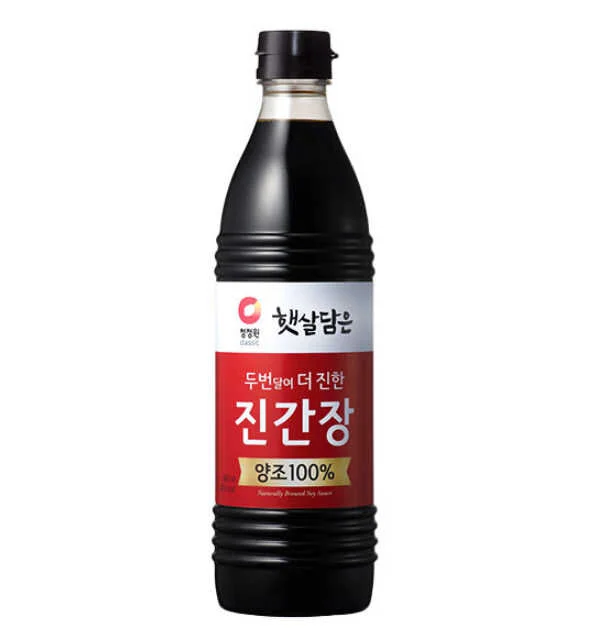
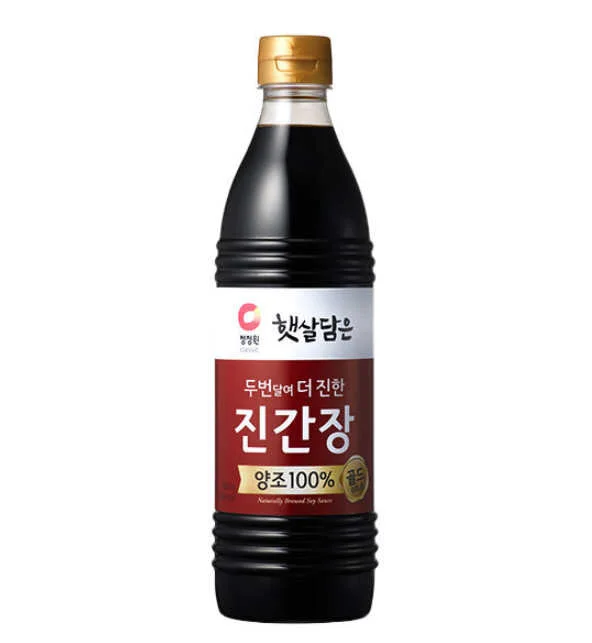
So what’s a Korean-food-fan-and-cooking person to do? Well, although SEMPIO is the oldest and biggest producer of soy sauce, it’s not the only option. You will be glad to learn CHUNG JUNG ONE does not use chemical processes at all in their soy sauces.
CHUNGJUNGONE JIN GANJANG T.N. 1.1%
CHUNGJUNGONE JIN GANJANG GOLD 1.3%
However, please note that these entry-level, inexpensive but lower quality soy sauces usually always have wheat and sugar additives.
There are other varieties available in Korea, but these are the brands you will most likely encounter outside the country. So if all that’s available at your local Korean grocer’s is Sempio, try to at the very least find JIN GANJANG GOLD S or GOLD F3.
But sometimes there are no choices, and I’ll be the first to tell you an entire generation have grown up on Sempio’s JIN GANJANG, so don’t worry too much and enjoy in moderation. And see if you can find something better online next time!
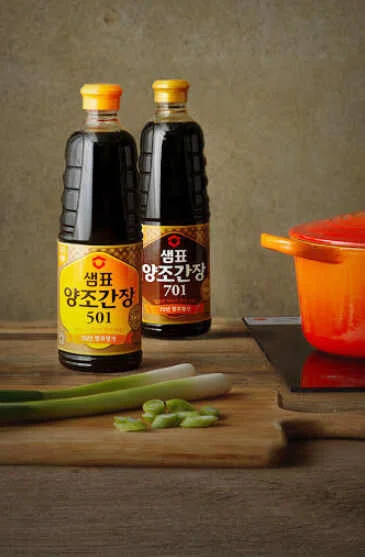
YANGJO GANJANG (made in the more relatively traditional way with a fermenting period of 6 months with the addition of wheat)
TRADITIONAL KOREAN SOY SAUCE (confusingly marketed under different terms depending on the brand- check the ingredients list, the shortest list with only beans, salt and water win!)
CHUNG JUNG ONE Yanjo soy sauce: Not currently available online but their entire soy sauce lineup omits any and all use of chemical soy sauce. You can safely buy any of their soy sauces if you find it at your local market.